

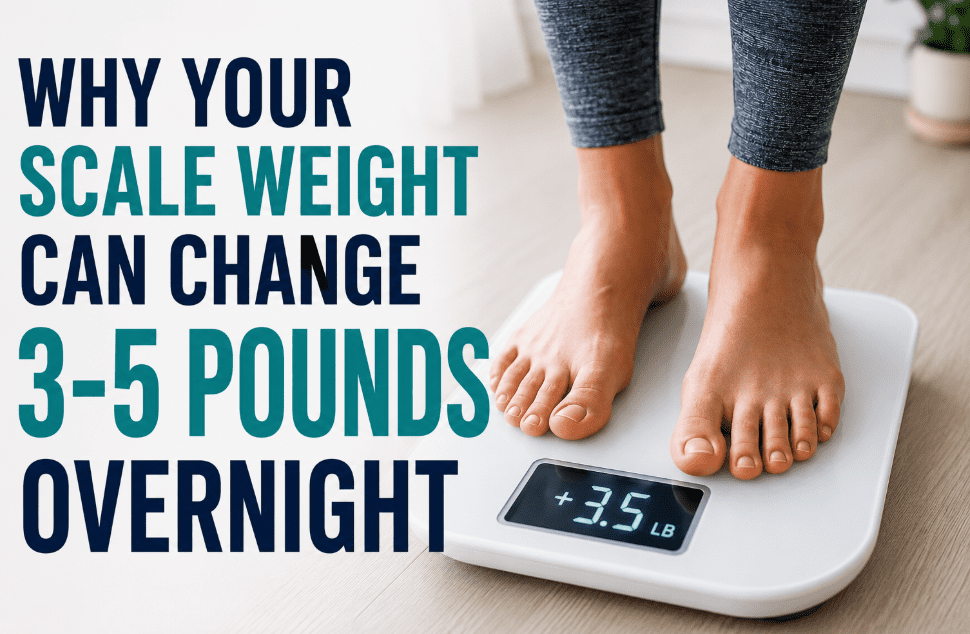
Why Your Scale Weight Can Change 3–5 Pounds Overnight
Your weight can fluctuate 3–5 pounds overnight from water retention, sodium, carbohydrates, digestion, hormones, and bowel movements—not necessarily body fat.

Medical weight loss has become more accessible than ever. Patients can now choose between traditional in-person care and online weight loss clinics that provide consultations, medical guidance, and prescription weight loss treatment through telehealth.
With medications such as Semaglutide and Tirzepatide becoming increasingly popular, many patients wonder: Is an online weight loss clinic as effective as seeing a provider in person?
The answer depends on your health needs, lifestyle, and the level of medical support provided.
Online and in-person weight loss clinics can both provide effective medical care. The best choice depends on your health needs, convenience, access to providers, and level of ongoing support.
An online medical weight loss clinic allows patients to meet with a licensed healthcare provider through telehealth rather than traveling to a physical office.
Depending on the program and individual medical needs, online weight loss care may include:
For many patients, the biggest advantage is convenience. Appointments can often be completed from home, making medical weight loss more accessible for people with demanding work schedules, family responsibilities, or limited access to a nearby clinic.
Traditional medical weight loss clinics provide face-to-face access to healthcare professionals and may offer additional services that cannot be performed virtually.
Depending on the clinic, patients may have access to:
For patients who prefer more direct interaction and accountability, visiting a clinic regularly may provide additional motivation and support.
The safety of an online weight loss program depends heavily on who is providing the care.
A reputable medical weight loss program should involve a qualified healthcare provider who evaluates your health history, current medications, potential contraindications, and treatment goals before determining whether prescription medication is appropriate.
Patients should be cautious of websites that appear to sell prescription weight loss medications without a legitimate medical evaluation or ongoing provider involvement.
Whether your appointment takes place online or in an office, medical oversight matters.
Neither option is automatically better for every patient.
Online medical weight loss may be a good fit if you:
In-person medical weight loss may be preferable if you:
Some medical weight loss practices offer both options, allowing patients to combine the convenience of telehealth with access to in-person services when needed.
Convenience should not be the only factor when choosing a weight loss provider.
Look for a program that provides legitimate medical oversight, clearly explains treatment options, evaluates your individual health history, and offers ongoing follow-up care.
You should also know who is prescribing your medication and where your prescription is being filled.
Be cautious of programs that make unrealistic weight loss promises, offer prescription medication without an appropriate medical evaluation, or provide little access to healthcare professionals after treatment begins.
Weight loss treatment involves more than receiving a prescription.
As your weight changes, your nutritional requirements, medication response, side effects, and treatment goals may also change. Regular follow-up gives your healthcare provider an opportunity to evaluate your progress and determine whether your treatment plan needs to be adjusted.
This is particularly important with GLP-1 medications, where appropriate dosing, nutrition, hydration, protein intake, side-effect management, and preservation of lean muscle mass can all play an important role in treatment.
The best medical weight loss clinic is not necessarily the one that is online or in person. It is the one that provides appropriate medical care, individualized treatment, ongoing monitoring, and reliable support.
For some patients, telehealth provides the flexibility needed to remain consistent with treatment. Others benefit from regular face-to-face appointments and in-office accountability.
If available, a medical weight loss program that offers both telehealth and in-person care can provide additional flexibility as your needs change throughout your weight loss journey.
At Envizion Medical, we believe medical weight loss should combine convenience with personalized medical support. Our team helps patients develop individualized weight loss plans based on their health history, goals, and treatment needs.
Ready to learn more about your medical weight loss options?
Call 813-279-2211 or visit EnvizionMedical.com to get started.
Important Disclosure:
(a) the Unapproved Compounded Drugs are compounded drugs that have not been approved by the FDA; have not been reviewed by the FDA for safety, effectiveness, or quality; and have not been demonstrated to the FDA to be safe or effective for their intended use;
(b) the processes by which the compounded drugs are manufactured have not been reviewed by the FDA; and
(c) FDA-approved products containing semaglutide are available.


