The Hidden Calories Preventing Your Weight Loss
You're eating healthier. You're watching your portions. Maybe you're even taking a weight loss medication and exercising regularly.
But the scale isn't moving.
What gives?
Sometimes the problem isn't your meals, it's the hidden calories sneaking into your day without you realizing it.
A splash of creamer here, a handful of nuts there, some dressing at lunch, and a few bites while cooking dinner may not seem like much individually. But together, they can add hundreds of extra calories to your day.
If your weight loss has slowed or completely stalled, it may be time to look beyond your meals.
1. Coffee Can Become a Dessert
Coffee itself is very low in calories. What we add to it is another story.
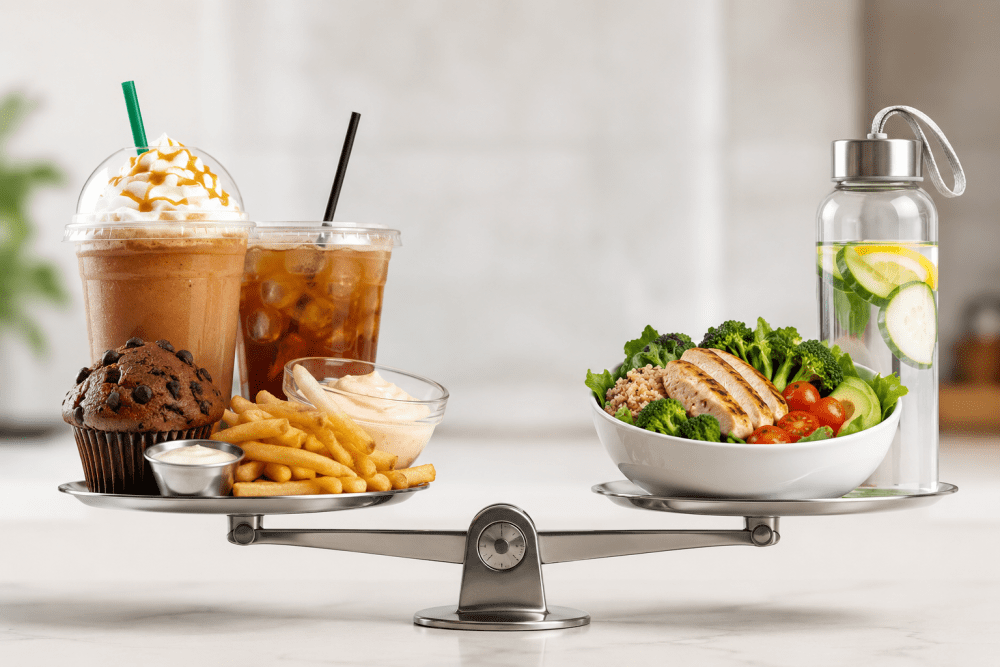
Flavored creamers, syrups, sugar, whipped cream, cold foam, and specialty coffee drinks can quickly turn your morning coffee into a high-calorie drink.
And because we're drinking those calories rather than eating them, they can be surprisingly easy to overlook.
Try this instead: Measure your creamer instead of pouring freely, reduce flavored syrups, or gradually transition toward lower-calorie options.
2. Salad Dressing Adds Up FAST
You're having a salad for lunch—great choice.
But what happens when you pour on the dressing?
Many dressings contain a significant amount of calories in a relatively small serving. And most people use considerably more than the serving size listed on the bottle.
Cheese, croutons, bacon, candied nuts, avocado, and other toppings can also transform a light salad into a surprisingly calorie-dense meal.
That doesn't mean you shouldn't eat them. It simply means portions matter—even when the food is healthy.
3. Nuts and Nut Butters
Nuts are nutritious and provide healthy fats, protein, vitamins, and minerals.
They're also extremely easy to overeat.
A small serving can quickly become several servings when you're eating directly from the container.
Peanut butter and almond butter are similar. One generous spoonful may contain considerably more than you think.
Tip: Portion nuts before eating them and measure nut butter occasionally so you know what a true serving looks like.
4. Cooking Oils Are Easy to Forget
Olive oil may be considered a healthy fat, but it's still calorie-dense.
If you're pouring oil directly into the pan, you may be consuming significantly more than you realize.
Butter, coconut oil, mayonnaise, and other cooking fats work the same way.
You don't necessarily need to eliminate them. Just become aware of how much you're actually using.
5. Sauces and Condiments
Ketchup.
BBQ sauce.
Ranch.
Mayonnaise.
Honey mustard.
Teriyaki sauce.
These small additions rarely feel like part of the meal—but they count.
If you're using several sauces throughout the day, those calories can quietly accumulate.
Look at serving sizes and nutrition labels. Sometimes switching products or simply using less can make a meaningful difference.
6. "Just One Bite" Still Counts
A bite of your child's chicken nuggets.
A few fries from your spouse's plate.
A spoonful while you're cooking.
A couple bites of dessert.
None of these seem important individually.
But if you're doing this throughout the day, those little bites can become an entire snack—or more—without ever registering as something you ate.
This is especially common when people say:
"I barely ate anything today!"
You may not have eaten a large meal, but grazing throughout the day still contributes to your total intake.
7. Liquid Calories Can Be Sneaky
One of the easiest places for calories to hide is in your drinks.
Think about:
- Sweet tea
- Juice
- Soda
- Energy drinks
- Sports drinks
- Sweetened coffee
- Smoothies
- Alcohol
Because liquids typically don't provide the same fullness as solid foods, you can consume a significant number of calories without feeling like you've eaten anything.
Water should be your primary beverage whenever possible.
8. Smoothies Aren't Automatically Weight-Loss Friendly
Fruit is healthy.
Protein is important.
But put fruit, juice, yogurt, peanut butter, honey, protein powder, and other ingredients into one blender and you may end up with far more calories than expected.
Smoothies can absolutely fit into a healthy diet—the ingredients and portions simply matter.
9. "Healthy" Doesn't Mean Unlimited
This is one of the most important lessons in weight loss.
Foods like avocado, nuts, granola, olive oil, hummus, peanut butter, dried fruit, and protein bars can all be part of a nutritious diet.
But nutritious foods still contain calories.
You don't need to be afraid of these foods or eliminate them. Instead, become aware of portion sizes—particularly with calorie-dense foods.
10. Restaurant Meals May Contain More Than You Think
You order grilled chicken and vegetables, so you assume you're making a low-calorie choice.
But restaurants often use oils, butter, sauces, marinades, and larger portions than you would use at home.
Even seemingly healthy restaurant meals may contain hidden calories.
When eating out, consider asking for:
- Dressing on the side
- Sauces on the side
- Grilled instead of fried
- Vegetables without added butter
- A to-go container for oversized portions
Small changes can make restaurant meals much easier to fit into your plan.
11. Weekend Calories Still Count
Eating perfectly Monday through Friday doesn't completely cancel out a high-calorie weekend.
Restaurant meals, drinks, appetizers, desserts, snacks, and larger portions can quickly erase the calorie deficit you created during the week.
You don't have to stop enjoying weekends.
The goal is consistency—not perfection.
Enjoy yourself while continuing to be mindful of portions and choices.
12. Protein Bars Aren't Always Just Protein
Some protein bars are excellent convenient options.
Others aren't much different nutritionally from candy bars.
Check the label.
Look at the amount of protein, calories, added sugar, and serving size instead of assuming something is healthy simply because the package says "protein."
The Biggest Mistake: Guessing Your Portions
Humans are surprisingly bad at estimating portions.
A "tablespoon" of peanut butter can become two or three.
A "little" salad dressing can turn into several servings.
A "handful" of nuts can vary dramatically depending on who's holding them.
You don't need to weigh and measure your food forever.
But if your weight loss has stalled, measuring your portions for several days can be extremely eye-opening.
Don't Just Eat Less—Eat Smarter
The answer isn't starving yourself.
In fact, eating too little can make it difficult to get enough protein and essential nutrients, particularly for patients whose appetite is already reduced by weight loss medications.
Instead, focus on making your calories count.
Prioritize:
Protein + vegetables + fiber + water + appropriate portions
Then pay attention to the extras.
Those "little things" may be exactly what has been preventing the scale from moving.
Taking a GLP-1? Hidden Calories Still Matter
Medications such as semaglutide and tirzepatide can help reduce appetite and improve fullness, but they don't make nutrition irrelevant.
If you're eating smaller meals but regularly consuming calorie-dense drinks, sauces, snacks, or restaurant foods, your progress may still slow.
This is why successful medical weight loss involves more than medication.
Nutrition, protein intake, hydration, activity, sleep, muscle preservation, and behavioral changes all matter.
Before You Say "My Medication Stopped Working"...
Take a quick look at your routine.
Ask yourself:
What am I drinking?
What am I adding to my food?
Am I measuring calorie-dense foods?
Am I grazing throughout the day?
Are my weekends very different from my weekdays?
Am I getting enough protein?
Sometimes a weight loss plateau doesn't require a dramatic change.
It requires finding the small things that have slowly crept back into your routine.
Looking for Weight Loss Support in Land O’ Lakes or Carrollwood?
Envizion Medical provides physician-supervised weight loss programs for adults looking for personalized support.
Our team focuses on education, accountability, body composition, nutrition guidance, and individualized care plans designed to help patients work toward sustainable results.
Whether you are exploring GLP-1 medications, appetite suppressants, peptide support, hormone optimization, or nutrition counseling, having a structured medical approach may help improve long-term success.
Schedule a Consultation
Envizion Medical Land O’ Lakes & Carrollwood, Florida 813-279-2211 www.envizionmedical.com
Guided care. Personalized plans. Real results.
Disclaimer: Compounded medications are not FDA-approved and have not been evaluated by the FDA for safety, effectiveness, or quality. Compounded medications are prepared by licensed compounding pharmacies. FDA-approved Semaglutide and Tirzepatide products are available. Patients should discuss risks and benefits with a licensed medical provider.
Author
 Molly Schulz
Meet Molly Schulz, MS, Nutritionist, a passionate voice in the world of weight loss, nutrition, and fitness. With a Master’s degree in Nutrition, Molly combines science-backed knowledge with real-world strategies to help people achieve sustainable, healthy results—without extremes or confusion.
Molly believes that true transformation happens when nutrition, movement, and mindset align. Her writing focuses on simplifying complex health topics, breaking down weight loss plateaus, supporting metabolic health, and helping readers build habits that actually last. Whether she’s discussing GLP-1 support, gut health, or high-protein meal strategies, her approach is always practical, realistic, and results-driven.
When she’s not writing or coaching, you’ll find Molly in the gym—where she genuinely thrives. Strength training isn’t just part of her routine; it’s part of her identity. She’s a firm believer that fitness should feel empowering, not punishing, and she brings that same energy into